What Should NGOs Check Before Ordering Menstrual Hygiene Kits in Bulk?
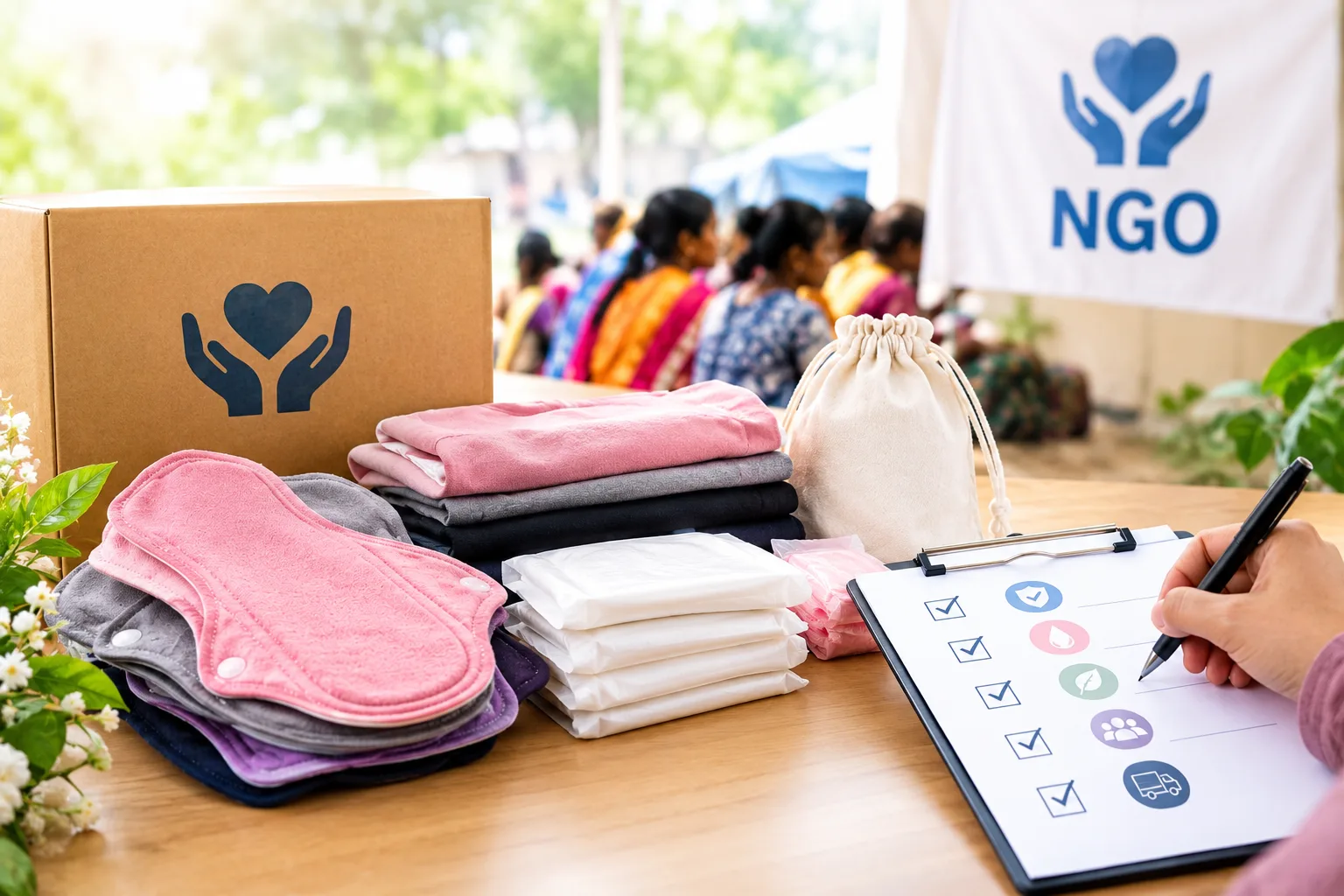
When a disaster strikes or a community faces a crisis, access to basic menstrual hygiene products can become difficult. This is where menstrual hygiene kits can help NGOs provide essential products to women and girls who need them. Not only can these kits provide important period care items, but they can also help women and girls manage their periods with greater dignity when supplies are limited.
However, when it comes to ordering menstrual hygiene kits in bulk, choosing the right kits requires careful planning. Since a bulk order may include hundreds or thousands of kits, issues with product quality, kit contents, packaging, or cost can affect many users.
Nonetheless, by doing some research and checking the key details before placing an order, NGOs can plan their purchases better and avoid common issues.
Here are five things NGOs should check before ordering menstrual hygiene kits in bulk.
Kit Contents and Menstrual Care Needs
When it comes to ordering menstrual hygiene kits in bulk, make sure you check whether the kit contents match the needs of the people who will use them. Review each item before placing a large order to make sure the kit includes useful products for the intended users.
- Product Selection: Check the type and number of menstrual products included in each kit. Make sure the products are suitable for regular menstrual care.
- Absorbency and Sizes: Look for products that can meet different flow needs. Different sizes or absorbency levels may be useful for different users.
- Extra Items: Check whether the kit includes useful items such as underwear, drying bags, carry pouches, or other hygiene products.
- User Needs: Consider the age group, living conditions, and purpose of the program when choosing the kit contents.
A kit should contain products that are useful for its intended users. Checking the contents in advance can help NGOs avoid paying for items that may not be needed.
Product Quality and Safety
In addition to checking whether the kit contents match the needs of the people who will use them, make sure you also check the quality and safety of the products before placing a bulk order. Since the products will be distributed to many users, even small quality issues can affect a large number of people.
- Materials: Check the materials used in the menstrual products. They should be suitable for regular contact with the skin.
- Comfort: Look at the product design and material to make sure the products are comfortable to use.
- Safety Checks: Ask whether the products go through quality checks before they are packed and sent.
- Consistency: Make sure the supplier can maintain the same product quality across the full order.
By checking the quality and safety standards of the products in advance, NGOs can make sure the kits meet the needs of the people who will use them.
Packaging, Storage, and Distribution
Packaging plays an important role when NGOs need to store and distribute a large number of menstrual hygiene kits. The packaging should keep the products clean and make the kits easy to handle.
- Individual Packaging: Check whether the menstrual products are packed in a clean and secure way.
- Kit Packaging: Make sure each kit is packed in a way that makes it easy to carry, store, and distribute.
- Storage: Ask about the best way to store the kits before they are given to users.
- Labeling: Check whether important product details and care instructions are clear and easy to understand.
Good packaging can make bulk distribution easier for NGO teams. It can also help keep the products protected before they reach the users.
Bulk Order Terms and Delivery
Before placing a large order, NGOs should understand the supplier’s order terms and delivery details. This can help them plan their program and avoid delays.
- Minimum Order Quantity: Check the minimum number of kits the supplier requires for a bulk order.
- Samples: Request samples before placing a large order when possible. This allows NGOs to check the kit contents, product quality, and packaging.
- Production Time: Ask how long the supplier needs to prepare the order. This is important when the kits are needed for a planned program or event.
- Delivery: Confirm the delivery time, shipping costs, and location where the order will be sent.
Knowing these details before confirming the order can help NGOs plan their budget, storage space, and distribution schedule.
Cost and Order Value
When ordering menstrual hygiene kits in bulk, make sure you check the total cost before placing the order. The final amount can include more than the price of the kits, so check all charges before confirming the purchase.
- Per-Kit Cost: Check the price of each kit based on the products and quantity included.
- Bulk Pricing: Ask whether the price changes when ordering a larger number of kits.
- Extra Costs: Check for additional charges related to packaging, customization, shipping, or other order requirements.
- Total Order Cost: Calculate the full cost of the order before confirming the purchase. This helps NGOs make sure the order fits the available budget.
Comparing the full order cost can give NGOs a clearer idea of what they will spend. It also helps them plan the number of kits they can provide through their program.
Conclusion
Ordering menstrual hygiene kits in bulk requires careful checks before the order is placed. NGOs should review the kit contents, product quality, packaging, order terms, delivery details and total cost. These factors can affect how useful, safe, and easy to distribute the kits are for the intended users.
Checking samples and supplier terms before confirming a large order can also help NGOs avoid issues with product quality, packaging, delivery or unexpected costs. A clear understanding of these details makes it easier to plan a bulk purchase that meets the needs of the program.
Are you looking to order menstrual hygiene kits in bulk for an NGO or community program? ReliefPad offers customizable menstrual hygiene kits that include reusable sanitary pads, underwear, a dry bag, and a carry pouch.
Frequently Asked Questions
Should NGOs request samples before ordering menstrual hygiene kits in bulk?
Yes. Samples allow NGOs to check the product quality, kit contents, packaging and overall design before placing a large order. This can help identify issues before the full order is produced.
What costs should NGOs check when ordering menstrual hygiene kits in bulk?
NGOs should check the per-kit price, bulk pricing, packaging costs, shipping charges, customization costs, and any other added fees. They should also calculate the total order cost before confirming the purchase.
How long does it take to receive a bulk order of menstrual hygiene kits?
The time can vary based on the order size, kit contents, customization, production needs and delivery location. NGOs should confirm the expected production and delivery time with the supplier before placing the order.
What should NGOs check about the packaging of menstrual hygiene kits?
NGOs should check whether the packaging keeps the products clean and protected. They should also consider whether the kits are easy to store, carry, and distribute. Clear labels and care instructions can also make distribution easier.