Reusable vs Disposable Sanitary Pads: Which Is Better for Comfort, Cost, and Sustainability
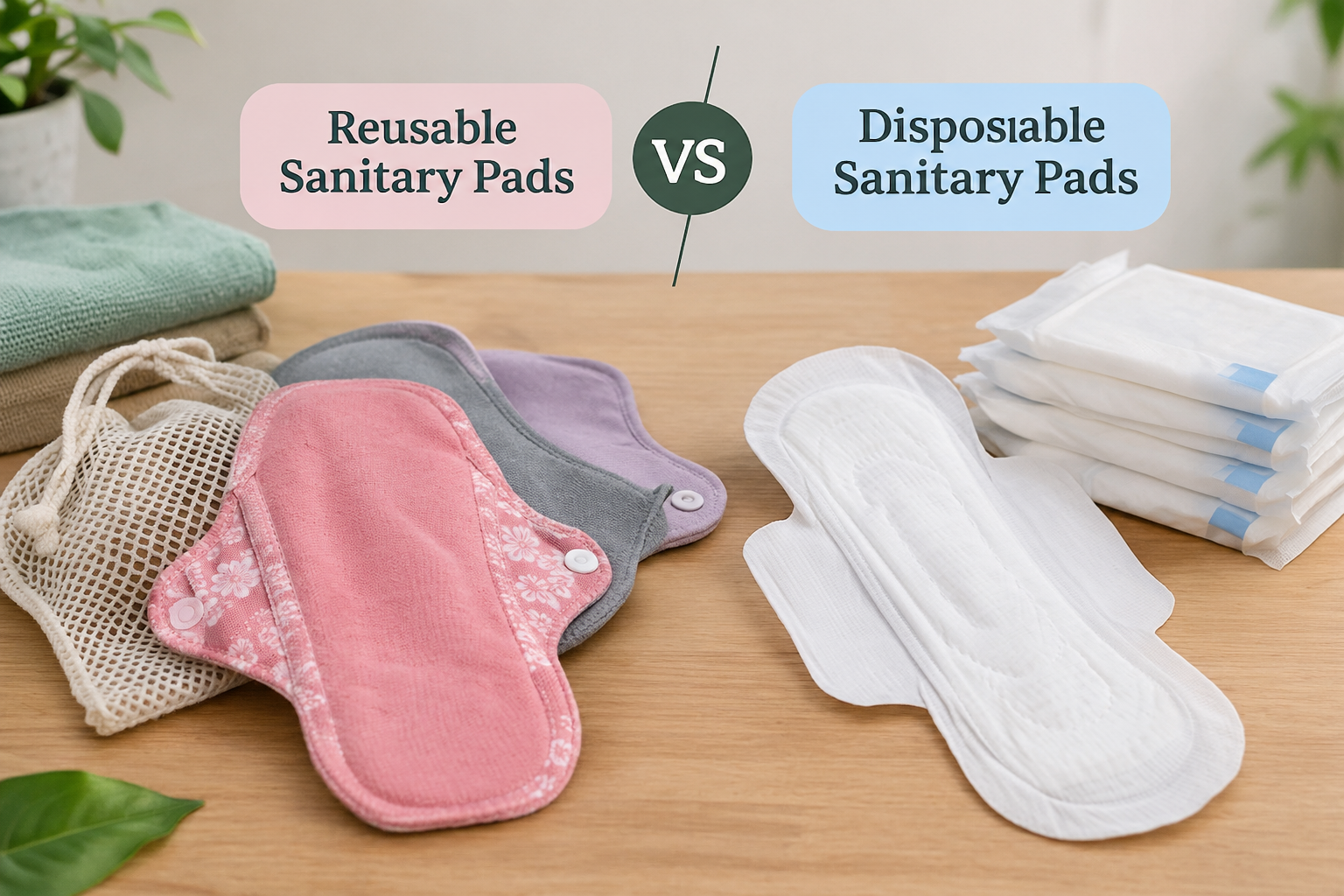
When it comes to caring for your period, choosing between reusable and disposable sanitary pads can make a big difference in comfort and menstrual care. While both types of pads help manage menstrual flow, they differ in how they are used, cared for, and disposed of after use.
Disposable pads are designed for one-time use, which means they need to be thrown away after every change. Using them regularly can lead to a large amount of menstrual waste, which can increase the amount of waste sent to landfills and add to environmental concerns. On the other hand, reusable pads can be washed and used again for many periods, which can help reduce waste as well as repeated purchases.
By understanding the differences in reusable vs disposable sanitary pads, you can compare their comfort, cost, care, and impact on waste and choose the type that fits your needs and daily routine.
5 Key Differences Between Reusable and Disposable Sanitary Pads
While both reusable and disposable sanitary pads help manage menstrual flow, they differ in several important ways that you should know before choosing one. These differences affect not just comfort but also how much you spend, how much care the pads need and how much waste they create after use. Understanding these differences can help you make a clearer choice based on your needs as well as routine.
Here are five key differences between reusable and disposable sanitary pads.
Comfort and Fit
When compared to disposable sanitary pads, reusable pads can provide a softer and more comfortable feel during use. They are made with fabric layers that can feel gentle against the skin and are designed for repeated use. Disposable pads also come in different sizes and thicknesses, but their feel can vary based on the materials used.
- Material: Reusable pads use washable fabric layers that are designed to absorb menstrual flow as well as provide effective coverage during use. On the other hand, disposable pads often contain plastic-based and synthetic materials that are designed for single use before being thrown away.
- Fit: A well-fitted reusable pad can stay securely in place during walking and daily movement. On the other hand, disposable pads can shift during movement, which can affect how securely they stay in place.
- Feel: Many reusable pads have a soft, fabric-like feel that can be comfortable against the skin. Disposable pads can feel different based on their material, thickness, and design.
Overall, reusable pads can provide a softer, more secure and comfortable fit, while disposable pads may feel less comfortable during extended wear and offer less flexibility in fit.
Cost Over Time
Unlike disposable pads, reusable pads can offer better long-term value as well as savings because they can be washed and used across many periods instead of being purchased again after each use. Their repeated use means fewer new pads are needed over time, while disposable pads need to be bought again throughout each period.
- Repeated Use: Reusable pads can be used across many periods when they are cared for properly, helping reduce the need to buy new pads regularly. On the other hand, disposable pads need to be purchased again after each use.
- Regular Purchases: With reusable pads, repeated use across many periods can help limit the need for frequent purchases. On the other hand, disposable pads need to be bought again whenever used pads are discarded.
- Care Cost: Reusable pads need little to no care beyond basic washing and drying after use. On the other hand, disposable pads do not need washing but must be purchased repeatedly throughout each period.
With repeated use over many periods, reusable pads can provide greater value as well as savings over time, while disposable pads require a new purchase after each use.
Sustainability and Waste
In terms of sustainability, reusable pads can support eco-friendly period care by helping reduce menstrual waste because they are made to be washed and used again. Disposable pads usually need to be replaced after each use, while reusable pads can be washed and used again across many periods.
- Landfill Waste: Disposable pads add to landfill waste because each used pad is thrown away after use. On the other hand, reusable pads can be washed and used again, helping reduce the amount of menstrual waste sent to landfills.
- Carbon Footprint: Because of the repeated production as well as disposal of disposable pads, they can contribute to greenhouse gas emissions during their life cycle. On the other hand, reusable pads can be used across many periods, reducing the need for frequent replacements and helping lower their overall carbon footprint.
- Packaging Waste: The extra wrappers as well as packaging used with disposable pads require additional materials and become waste after the product is opened. On the other hand, reusable pads can be used across many periods without needing new packaging for each use, helping reduce the environmental burden linked to packaging.
Reusable pads can be a more sustainable choice because repeated use helps reduce menstrual waste over time, while disposable pads create more waste each time they are used and discarded.
Ease of Use
Although reusable pads may take some getting used to at first, their simple design makes them easy to change and use throughout the day. Disposable pads can be less convenient to use because they need to be changed and discarded throughout the day.
- Changing: Reusable pads can be changed easily during the day and set aside after use. On the other hand, disposable pads need to be removed, wrapped, and discarded before a new pad is used.
- Placement: Reusable pads can be placed directly in the underwear and adjusted as needed for comfortable use. Disposable pads come with adhesive backing that must be positioned correctly and can shift during wear.
- Handling: Due to the fact that reusable pads can be folded and handled easily when changing, they are simple to carry and use during a period. Disposable pads need to be unwrapped before use and wrapped again before disposal.
Reusable pads can make daily period care more convenient, while disposable pads require repeated changing and disposal.
Period Protection and Leakage Control
When it comes to period protection, reusable pads can provide dependable coverage when the right size, absorbency and fit are chosen for your flow. Disposable pads also come in different absorbency levels, but they need to be changed and replaced after use, while reusable pads can be washed and used again.
- Absorbency: Reusable pads use absorbent layers that take in menstrual flow and provide protection during your period. On the other hand, disposable pads have a limited absorbency capacity and need to be changed once they become saturated.
- Coverage: Reusable pads provide coverage across the area where menstrual flow occurs, helping keep the surrounding area protected during use. Disposable pads can leave less coverage around the edges, which can make protection less dependable as well as increase the chance of leaks.
- Leakage Control: Since reusable pads use absorbent layers and full coverage, they can help contain menstrual flow and reduce leaks. On the other hand, disposable pads can provide less leakage protection once they reach their absorbency limit.
Reusable pads can provide reliable coverage with the right size, absorbency and fit, while disposable pads may offer less dependable protection as they reach their absorbency limit.
Conclusion
Choosing between reusable and disposable sanitary pads comes down to what matters most during your period. Reusable pads can be a good choice if you want a product that can be washed and used across many cycles while helping reduce waste and repeated purchases. Disposable pads may seem convenient because they do not need washing or drying, but they must be thrown away after each use. Since many contain plastic materials, they can take a long time to break down, which can add to the amount of waste that remains in landfills.
Overall, reusable pads can offer long-term value, reduce menstrual waste and be used across many cycles. They are a more sustainable choice that can help cut down on the number of pads sent to landfills while reducing the need for repeated purchases.
Are you looking for reusable pads that offer comfort, protection and long-term use? ReliefPad offers affordable and eco-friendly reusable pads designed to provide dependable protection and lasting comfort during your menstrual cycle.
Frequently Asked Questions
Are reusable sanitary pads comfortable to wear?
Reusable sanitary pads can be comfortable when they have soft fabric, fit well, and match your flow. Comfort can vary from person to person, so material, size and fit all matter.
How long do reusable sanitary pads last?
Their life depends on the material, use, washing method, and care. With proper care, a good reusable pad can be used for many periods.
Do reusable sanitary pads cause skin irritation?
Reusable sanitary pads do not have to cause skin irritation when they are made with suitable materials and cared for well. Washing them properly and drying them fully before use can help keep them clean and comfortable.
How should reusable sanitary pads be washed?
Reusable sanitary pads should be washed after use based on the care instructions provided with the product. They should be cleaned well, rinsed, and dried fully before the next use. Keeping them dry between uses also helps with hygiene.